Understanding Lymphoedema
📅 August 2026 | 🕐 5 min read | ✍️ Ynone Team
What Is Lymphoedema? A Clear Guide for Patients
How the lymphatic system works
Your body has two circulatory systems. The first is the blood system — familiar to most. The second, less visible but equally important, is the lymphatic system.
Every day, your blood vessels release fluid into the surrounding tissue to nourish your cells. Most of this fluid returns to the veins on its own. However, the rest is collected by the lymphatic system, which carries it back into the bloodstream through a network of vessels and lymph nodes.
The lymphatic system does three essential things:
- It drains excess fluid from the tissues
- It filters waste and harmful substances
- It produces immune cells that help fight infection
Why movement matters for lymph flow
Unlike the heart, the lymphatic system has no dedicated pump. Instead, lymph moves through gentle contractions of the vessel walls, supported by breathing and physical movement. This is one of the key reasons why staying active plays such an important role in daily lymphoedema self-management.
What is lymphoedema?
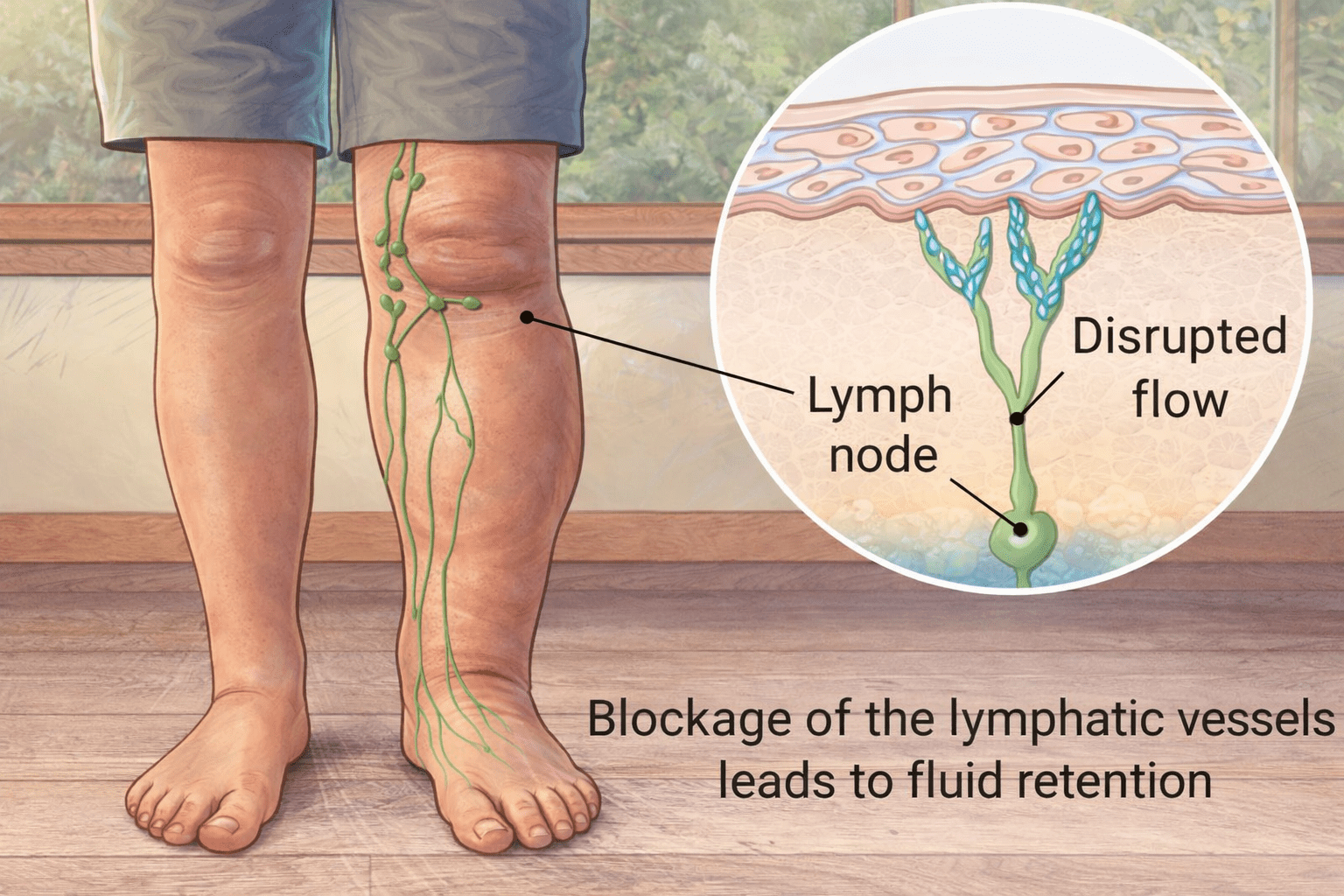
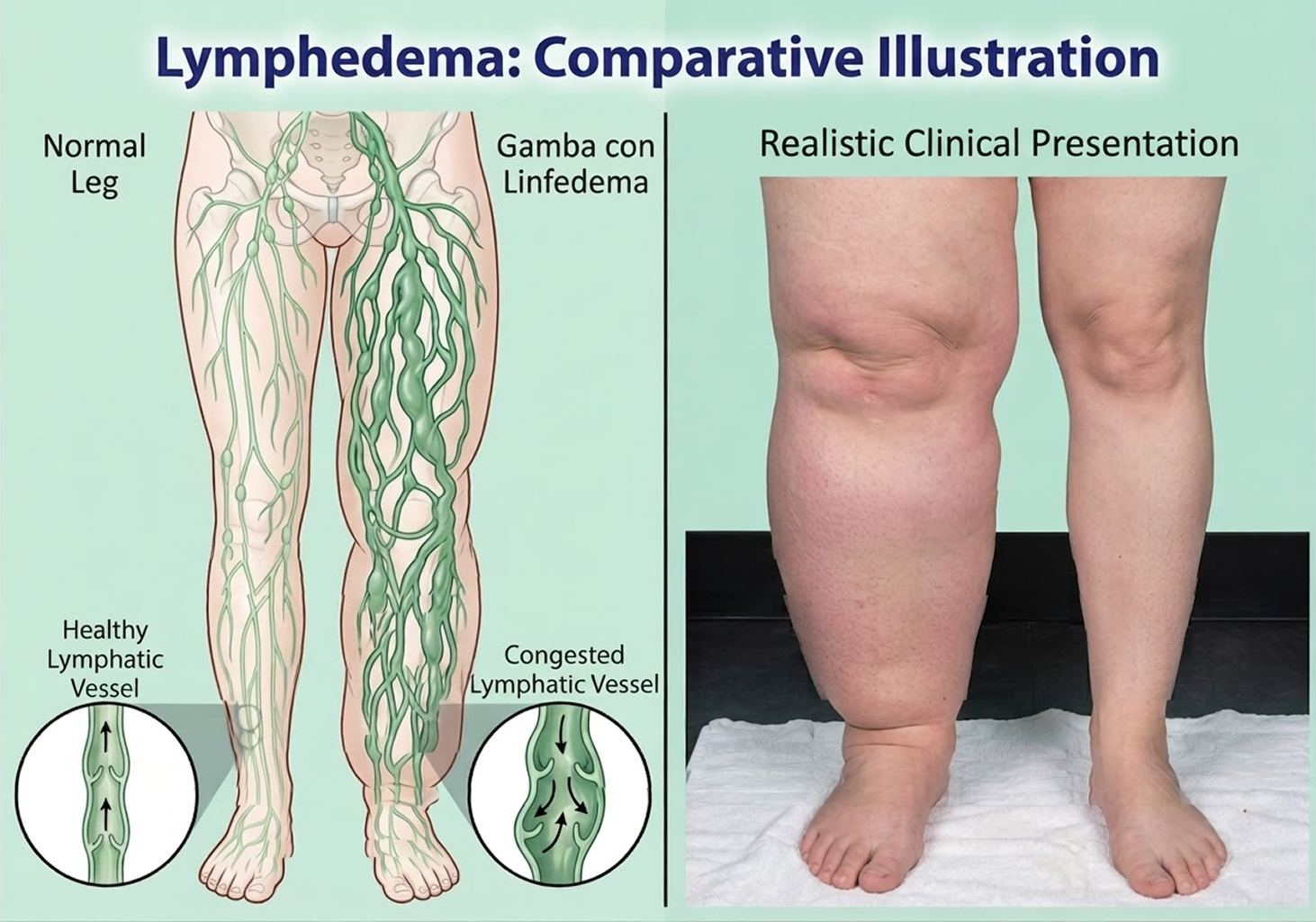
Lymphoedema happens when the lymphatic system can no longer drain fluid properly. When lymphatic vessels or nodes are damaged, missing or underdeveloped, fluid builds up in the tissue and causes swelling — most commonly in the arms or legs, though it can affect any part of the body.
Importantly, this is not simple water retention. The fluid that accumulates is protein-rich, and over time it can trigger significant changes in the tissue: hardening, thickening, and a higher susceptibility to skin infections.
Lymphoedema is a chronic condition. There is currently no cure. However, with the right daily routine and consistent self-management, most people with lymphoedema live full, active lives. You can learn more about the causes and stages on our dedicated What is Lymphoedema page.
Primary and secondary lymphoedema
There are two main forms of lymphoedema — primary and secondary — and understanding the difference helps clarify both the cause and the management approach.
Primary lymphoedema
Primary lymphoedema is present from birth. It is caused by lymphatic vessels that are too narrow, absent, or structurally abnormal. It can appear at any age — sometimes triggered by a seemingly minor event such as an injury or infection — and most commonly affects the legs.
If your child has been diagnosed with primary lymphoedema, our LYlife support group for children and families offers a safe space to connect with others who understand.
Secondary lymphoedema
Secondary lymphoedema develops when a previously healthy lymphatic system is damaged. The most common causes include:
- Cancer treatment — surgery to remove lymph nodes, or radiation therapy
- Skin infections such as cellulitis (erysipelas / Wundrose)
- Trauma or surgery affecting the lymphatic vessels
- Untreated chronic venous problems over many years
- Severe obesity
Notably, many patients are taken completely by surprise when they develop secondary lymphoedema — they were never told the risk existed. This is one of the most important gaps that patient education can help to close.
The four stages of lymphoedema
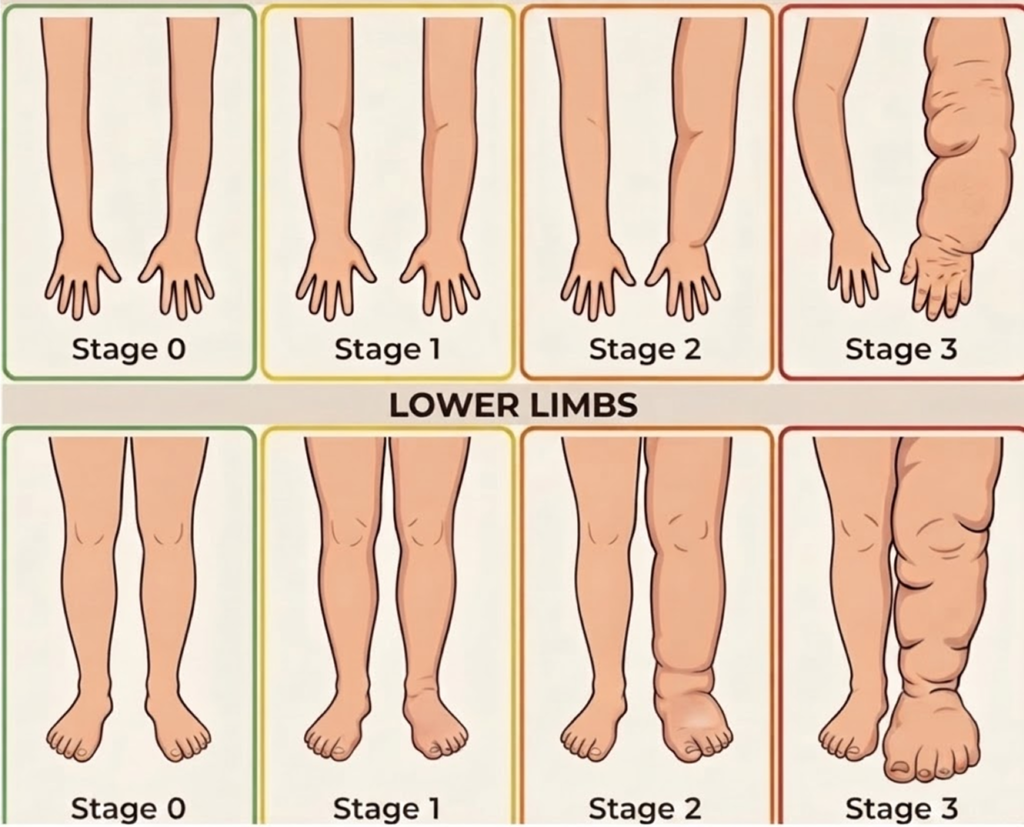
Lymphoedema progresses through four stages, from 0 to 3. Understanding these stages helps patients and clinicians communicate clearly about severity and treatment goals. For a more detailed overview, visit our What is Lymphoedema page.
Stage 0 — Latent
The lymphatic system is already damaged, but no swelling is visible yet. The system is still coping — however, with reduced reserve. Early intervention at this stage offers the best long-term outcomes.
Stage 1 — Mild
Soft, visible swelling appears. At this stage, the swelling still reduces when you elevate the limb. Consistent compression and self-management are essential to prevent progression.
Stage 2 — Moderate
Swelling no longer reduces with elevation. Furthermore, the tissue begins to harden (fibrosis), and skin infections become more frequent. Conservative therapy remains the cornerstone of management.
Stage 3 — Severe (Elephantiasis)
Significant swelling and pronounced skin changes occur, with substantial impairment of limb function. This stage is less common in countries with access to early treatment. Even so, conservative therapy continues to play a vital role in stabilising the condition.
The earlier lymphoedema is identified and managed, the better the long-term outcome. Progression is not inevitable — and that is one of the most important things to understand about this condition.
What does lymphoedema actually feel like?
Beyond the clinical description, living with lymphoedema involves a set of daily sensations that are often difficult to explain to others. Most people describe:
- Heaviness — a persistent weight in the affected limb, present from the moment you wake up
- Tightness — clothes or shoes that fit in the morning feel tight by afternoon
- Fatigue — the affected limb tires more quickly than the other
- Fluctuating swelling — often worse in heat, after long periods of sitting or standing, or at the end of the day
The emotional side of lymphoedema
Beyond the physical experience, there is the emotional side. The daily demands of management, the visibility of the condition, the uncertainty — these are real and significant. Research published in 2025 confirms that people with lower limb lymphoedema experience significantly higher rates of anxiety and depression than the general population.
You are allowed to find this hard. Moreover, you deserve support — both practical and emotional. Our LYlife community exists precisely for this reason. You are not alone in what you are experiencing.
How lymphoedema is managed
The internationally recognised gold standard for lymphoedema management is Complete Decongestive Therapy (CDT), developed and refined at specialist centres including the Földiklinik in Germany. CDT combines four essential elements:
1. Compression therapy
The most important pillar of CDT. Wearing a prescribed compression garment — stocking or sleeve — during waking hours supports lymph drainage and controls swelling. Importantly, the garment must be correctly fitted and prescribed by a qualified professional.
2. Manual lymphatic drainage (MLD)
A specialised massage technique that stimulates lymph movement, carried out by a trained lymphoedema therapist. MLD always begins centrally — at the neck — to prepare the drainage pathways before working on the affected limb.
3. Therapeutic exercise
Movement actively supports lymph flow. Exercise is most effective when performed with compression in place, as the muscle pump created by movement enhances drainage significantly.
4. Skin care
Daily moisturising and careful attention to any breaks in the skin are essential. Even a small wound can become the entry point for a serious skin infection (erysipelas), which can in turn worsen the lymphoedema itself.
Two phases of CDT
CDT works in two phases. First, an intensive decongestion phase with a therapist, focused on reducing swelling as much as possible. Second, a long-term maintenance phase managed mostly at home. Most people with lymphoedema spend the majority of their time in this second phase — between appointments, in daily life. Therefore, building a clear, manageable daily routine is where real difference is made. Ynone is designed precisely to support this phase.
You are not alone
Lymphoedema responds to knowledge and consistency. The more clearly you understand what is happening in your body, and the more structure you bring to daily self-management, the more control you have over your condition.
Furthermore, there are communities of people who understand exactly what you are going through — patients, caregivers, and families navigating the same daily realities. Our LYlife support group, part of Lymphselbsthilfe e.V. with over 500 active members across Germany, is open to families and adults living with lymphoedema.
You can also read more about the mission behind Ynone and why it was built on our Our Mission page.
How Ynone supports daily lymphoedema self-management
Managing lymphoedema between clinical appointments is complex. Keeping track of measurements, following a daily therapy routine, remembering compression garment renewals, and preparing for visits with your care team all require structure and consistency.
Ynone is a digital self-management platform designed to support people with lymphoedema in their daily routine. Specifically, it helps you:
- Track your daily therapy activities — drainage, compression, exercise, skin care
- Record your limb measurements over time and visualise changes
- Set reminders for compression garment renewals and appointments
- Organise the information you want to share with your doctor or physiotherapist
Ynone is an educational and self-management support tool. It does not diagnose lymphoedema, and it does not replace your healthcare team.
→ Join the Beta waitlist at ynone.eu — it's free
Interested in how Ynone can support your clinic or practice? Visit our partnership page to learn more.
Key takeaways
- Lymphoedema is a chronic condition caused by damage to or underdevelopment of the lymphatic system.
- It exists in two forms — primary (congenital) and secondary (acquired).
- It progresses through four stages; early identification significantly improves outcomes.
- Complete Decongestive Therapy (CDT) is the internationally recognised gold standard.
- Daily self-management — compression, movement, skin care, tracking — makes the greatest difference over time.
- Emotional support is as important as physical management. You are not alone.
Sources and clinical references
This article was written using current clinical guidelines and peer-reviewed sources, including:
- International Society of Lymphology (ISL) — Consensus Document on the Diagnosis and Treatment of Peripheral Lymphedema, 2020
- International Lymphoedema Framework (ILF) — Best Practice Documents
- British Lymphology Society (BLS) — Lymphoedema Clinical Definitions and Assessment Guide (5S), September 2025
- Földiklinik / Földi College — CDT clinical principles and training documentation
- Kitaw et al. — Lower limb lymphoedema and mental depression: systematic review and meta-analysis, Global Epidemiology, 2025
This article is reviewed periodically to ensure accuracy. It is intended for educational purposes only. Always consult a qualified healthcare professional for advice about your individual situation.
This article was produced with the support of AI-assisted research and writing tools, and reviewed for clinical accuracy by Dr. Oberlin, specialist in lymphology at the Földiklinik (Germany) and lead author of the 2026 international lymphoedema clinical guidelines. The final content reflects current evidence-based practice and has been approved for publication by the Ynone clinical advisory team.
Try Ynone for free
Join the App Waiting List
Be among the first to try Ynone and help shape a digital self-management tool built for people living with lymphoedema. No commitment — just early access.
Join the waiting list