
Living with lymphoedema
📅 October 2026 | 🕐 5 mins reading time | ✍️ Ynone Team
Lymphoedema and daily life: what it really looks like
Living with lymphoedema is not just about managing swelling.
It is about the alarm going off twenty minutes earlier so there is time to put the compression stocking on before getting out of bed. It is about checking the weather before getting dressed, because heat will affect how the leg feels by afternoon. It is about the mental calculation that happens before every trip, every restaurant booking, every day at the beach — will there be somewhere to sit? How far is the walk? What do I do if my leg swells?
Lymphoedema is a chronic condition. And like all chronic conditions, it is not something that happens in a clinic. It happens in daily life — in the kitchen, at the school gate, at the office, on holiday, at the gym. In the small decisions and the quiet adaptations that become, over time, simply part of how you live.
This article is about that daily reality.
The morning routine
For most people with lymphoedema, the day begins with compression.
The general recommendation is to put on your compression garment as soon as you get up — ideally before getting out of bed, when the limb is at its smallest and fluid has not yet begun to accumulate with gravity and movement. For some people this is a quick, practiced habit. For others — particularly in the early weeks after diagnosis, or when a new garment is stiff and unfamiliar — it takes time, effort and patience.
A donning aid helps. So does a consistent routine: same time, same order, same technique. Many people find that making compression part of a broader morning sequence — garment on, coffee, skin check, breakfast — reduces the friction of getting it done on days when motivation is low.
After the garment is on, many patients do a brief session of self-drainage — a gentle self-massage technique taught by their lymphoedema therapist that stimulates the lymphatic system before the day begins. Not everyone does this daily, and not everyone needs to. But for those who do, it can make a noticeable difference to how the limb feels throughout the day.
Skin care is the third element of the morning routine. Daily moisturising — particularly in the affected limb — keeps the skin supple, reduces the risk of dryness and cracking, and maintains the skin barrier that protects against infection. It takes two minutes. It matters more than it sounds.
Getting dressed
This is something that rarely comes up in clinical appointments, but it is a real and daily consideration for many people with lymphoedema.
Clothing that fits well in the morning may feel tight by the afternoon. Shoes that were comfortable in winter may be too constricting in summer heat. Waistbands, socks and tight sleeves can interfere with lymph flow if they create a constriction point. Many patients develop a quiet expertise in choosing clothes that work with their condition rather than against it — looser fits, natural fabrics, shoes with adjustable fastenings.
The compression garment itself changes what works. Some people are very comfortable wearing theirs visibly — and over time, particularly as garment options have expanded to include different colours, patterns and fabrics, many feel genuinely fine about it. Others find it harder, particularly in summer, on the beach, or in settings where they feel exposed. Both responses are completely understandable.
At work
Lymphoedema at work raises practical questions that many patients navigate largely alone.
Long periods of sitting — in meetings, at a desk, in a car — reduce lymph flow and allow fluid to accumulate. Getting up and moving every hour or so, even briefly, makes a measurable difference. A small footrest, a chair that allows the legs to be elevated slightly, or a standing desk can all help.
Some jobs involve long periods of standing, which can also worsen lower limb swelling. Compression is especially important in these situations — and taking breaks to sit and elevate the limb when possible is worth building into the day.
Whether to tell an employer or colleagues is a personal decision. Some people find that a brief, matter-of-fact explanation — "I have a lymphatic condition that means I need to move around regularly" — is enough to get the practical accommodations they need without extensive disclosure. Others prefer to keep it private. Both are valid.
Food, drink and everyday habits
There is no specific lymphoedema diet — no food that directly causes or cures the condition. But some general habits support your overall health.
Adequate hydration is important for general health and should be part of a balanced lifestyle. There is no need to restrict fluid intake because of lymphoedema unless medically indicated.
A balanced diet, including an appropriate salt intake, supports general cardiovascular and metabolic health. However, lymphoedema is not simply water retention caused by dietary salt, so changing your salt intake is not a treatment for lymphoedema itself.
Some people notice that their swelling feels worse after drinking alcohol. Again, this is not a prohibition — it is information that allows you to make your own choices.
Weight management matters too. Excess body weight places additional load on an already compromised lymphatic system and makes management harder. But this is worth approaching gently — the relationship between weight and lymphoedema is complex, and shame-based pressure is neither helpful nor accurate. Many people with lymphoedema struggle with weight precisely because of the condition itself, not despite it.
Exercise and movement
Physical activity is one of the most beneficial things you can do for lymphoedema — not just for the condition, but for overall wellbeing. Walking, swimming, cycling, yoga — all of these support lymph flow and keep the muscle pump active.
Talk to your therapist about whether to wear compression for the activities you choose, build intensity gradually, and notice how your limb responds. Some temporary heaviness after exercise is normal and usually resolves within a few hours. Consistent worsening that does not resolve is worth discussing with your therapist.
For many people, finding a form of movement they genuinely enjoy — rather than one that feels like medical obligation — makes the difference between a sustainable habit and one that fades after a few weeks.
Travel
Travel with lymphoedema is absolutely possible. But it requires some planning.
Long-haul flights and car journeys involve extended periods of immobility, which are hard on the lymphatic system. Compression during travel is often recommended, so discuss it with your therapist before a long journey. Moving around regularly — getting up to walk the aisle of a plane, stopping to stretch on a long drive — helps. Staying hydrated matters even more than usual.
Heat at your destination can worsen swelling. Air-conditioned environments, cool water, and rest during the hottest part of the day all help. Packing your compression garment in your hand luggage — never in checked baggage — is a habit worth forming.
Many people also carry a brief medical summary explaining their condition and their treatment needs, in case of any issues with medication or equipment at borders.
The emotional texture of daily life
The practical adaptations of living with lymphoedema are real — but so is the emotional texture that surrounds them.
The frustration of a flare on a day that was supposed to be a good one. The quiet pride of a stable measurement after a difficult week. The relief of meeting someone else who immediately understands. The exhaustion of explaining the condition to a new person, again.
Lymphoedema is not always visible to others, even when it is consuming significant mental and physical energy. This invisibility can be isolating. Acknowledging it — to yourself, to the people around you, to your healthcare team — is part of living with the condition honestly.
Many people find that, over time, they develop a relationship with their condition that is neither defined by it nor in denial of it. Lymphoedema becomes part of daily life — managed, understood, and accommodated — without being the whole story.
Building a routine that works for you
The usual components of lymphoedema management — compression, exercise, skin care and, where prescribed, manual lymphatic drainage — sound straightforward in a clinical guide. In daily life, they require fitting several ongoing commitments into a schedule that already has many competing demands.
The routines that work over the long term are the ones that fit realistically into your actual life — not an idealised version of it. That might mean self-drainage on the commute, compression worn during a walk to school drop-off, skin care as part of an existing evening routine.
Start with what you can sustain. Build from there.
How Ynone helps you keep track
Ynone is a lymphoedema self-management platform designed to support the daily reality of living with the condition — not just the clinical appointments.
With Ynone, you can:
- Log your daily therapy routine — compression, drainage, exercise, skin care
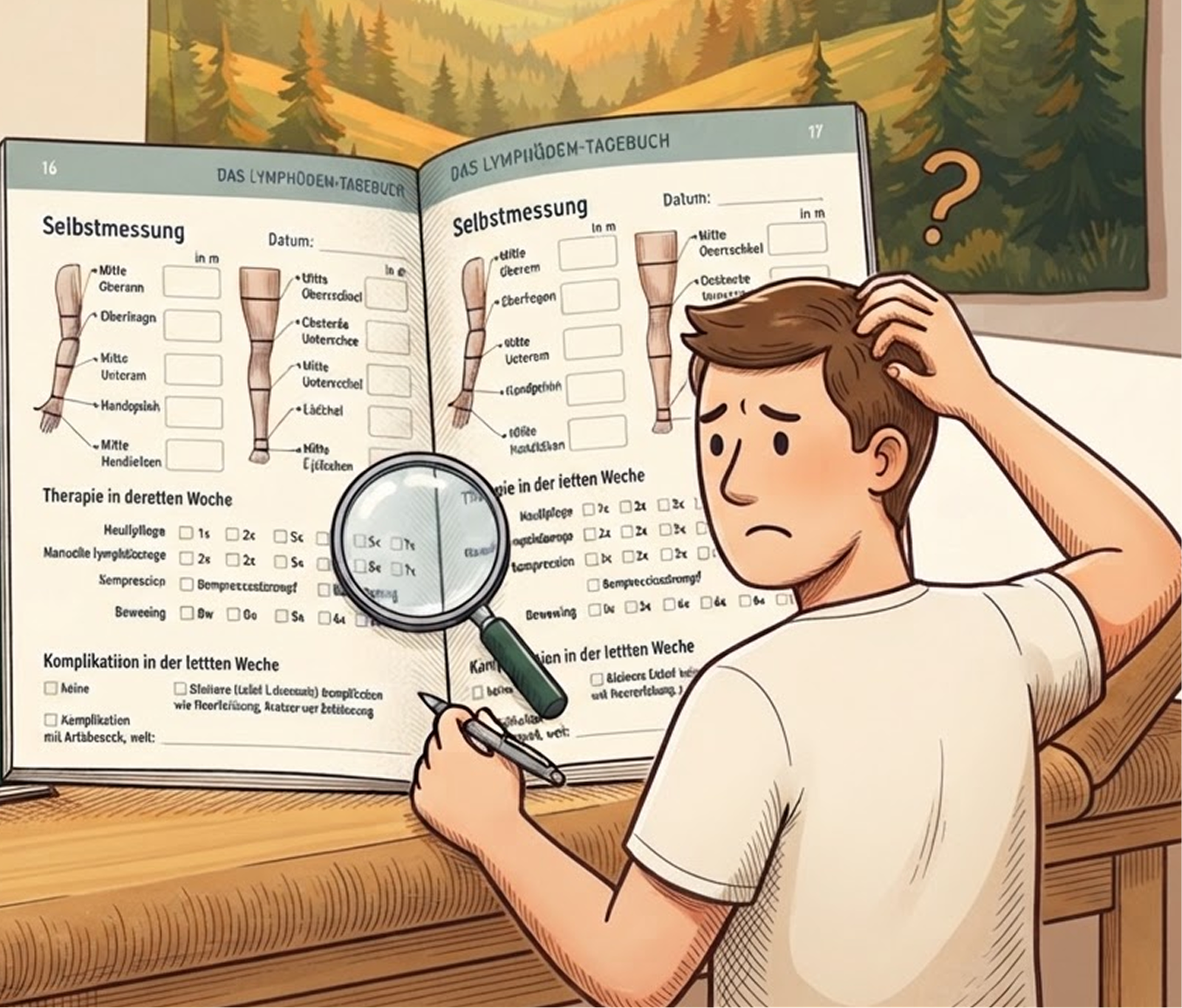
- Record your limb measurements and track changes over time
- Note symptoms and triggers as they happen — not just when you try to remember them weeks later
- Set reminders for garment renewals and daily routines
- Prepare a clear summary to share with your care team at appointments
One of the most useful habits in daily life with lymphoedema is tracking — not obsessively, but enough to notice patterns, catch changes early, and arrive at clinical appointments with useful information.
Furthermore, you can read more about what lymphoedema is and how it progresses on our What is Lymphoedema page, or find answers to common questions in our Ynone Blog.
Ynone is an educational and self-management support tool. It does not diagnose lymphoedema and does not replace your healthcare team.
Key takeaways
- Lymphoedema is managed in daily life — in the kitchen, at work, on holiday — not just in the clinic.
- A consistent morning routine — compression, self-drainage, skin care — makes the whole day easier to manage.
- Clothing, movement habits and workplace adjustments all play a real role in how you feel day to day.
- There is no specific lymphoedema diet, but hydration, balanced nutrition and weight management support your overall health.
- Exercise is beneficial — find a form of movement you genuinely enjoy and build it in gradually.
- Travel is possible with planning: compression during journeys, hydration, and a hand-luggage garment are key habits.
- The emotional side of lymphoedema is real and worth acknowledging — to yourself and to your care team.
- Routines that fit your actual life are the ones that last. Start with what you can sustain.
- Ynone helps you track what matters between appointments — so you build a clearer picture over time.
Sources and clinical references
This article was written using current clinical guidelines and patient research, including:
- International Society of Lymphology (ISL) — Consensus Document on the Diagnosis and Treatment of Peripheral Lymphedema, 2020
- British Lymphology Society (BLS) — Patient resources and clinical guidance
- Lymphoedema Support Network (LSN) — HealthUnlocked patient community insights
- Földiklinik / Földi College — CDT clinical principles and patient education
This article is reviewed periodically to ensure accuracy. It is intended for educational purposes only. Always consult a qualified healthcare professional for advice about your individual situation.
This article was produced with the support of AI-assisted research and writing tools, and reviewed for clinical accuracy by Henry Schulze, Clinical Advisor, Lymphoedema Therapist, Educator & Author.
Try Ynone for free
Join the App Waiting List
Be among the first to try Ynone and help shape a digital self-management tool built for people living with lymphoedema. No commitment — just early access.
Join the waiting list