
Living with lymphoedema
📅 August 2026 | 🕐 5 Min. Lesezeit | ✍️ Ynone Team
Primary lymphoedema in children: a guide for parents
What is Complete Decongestive Therapy?
Complete Decongestive Therapy — known as CDT, or in German as Komplexe Physikalische Entstauungstherapie (KPE) — is the internationally recognised gold standard for lymphoedema management. Furthermore, it is the most evidence-based approach available for conservative lymphoedema care.
CDT was developed and refined at specialist lymphology centres, most notably the Földiklinik in Germany. Moreover, it is now recommended by all major international lymphoedema guidelines, including those of the International Society of Lymphology (ISL) and the International Lymphoedema Framework (ILF).
The core principle of CDT is straightforward: lymphoedema cannot be cured, but its progression can be significantly slowed — and in many cases stabilised — through consistent, structured daily management. Therefore, CDT is not a temporary treatment. It is a lifelong approach to managing the condition.
Why CDT is the gold standard for lymphoedema
No other approach to conservative lymphoedema management has the same breadth of clinical evidence behind it. Consequently, CDT remains the recommended first-line approach for all stages of lymphoedema worldwide. You can read more about the stages of lymphoedema and what they mean on our What is Lymphoedema page.
The four pillars of CDT
CDT combines four essential components. Each pillar addresses a different aspect of lymphoedema management, and all four work together. Importantly, none of the four pillars is optional — the evidence consistently shows that the best outcomes come from combining all four, not from focusing on just one or two.
- Compression therapy — the most important pillar for long-term management
- Manual lymphatic drainage (MLD) — a specialised technique to stimulate lymph flow
- Therapeutic exercise — movement to activate the muscle pump
- Skin care — to protect against infection and maintain skin integrity
Compression therapy
Compression therapy is the single most important component of long-term lymphoedema management. Furthermore, it is the pillar that patients have the most control over in their daily life.
Wearing a correctly fitted compression garment — stocking, sleeve or bandage — during all waking hours keeps fluid from accumulating in the tissue between drainage sessions. Additionally, compression supports the lymphatic and venous systems by increasing tissue pressure, which reduces the amount of fluid leaking from blood vessels into the surrounding tissue.
Compression also activates what is known as the muscle-joint pump — the mechanism by which muscle contractions during movement actively push fluid through the lymphatic and venous systems. Therefore, compression works best when combined with regular physical activity.
Types of compression garments
Compression garments come in two main types: flat-knit and round-knit. Flat-knit garments are generally recommended for lymphoedema because they provide higher working pressure and can be made to measure for complex limb shapes. Round-knit garments are typically used for milder cases or for prevention.
When to renew your compression garment
Compression garments lose their effectiveness over time as the elastic fibres stretch with regular washing and wear. Most garments should be renewed every three to six months. Consequently, keeping track of when your garment is due for renewal is an important part of managing your lymphoedema effectively. Ynone helps you set reminders for compression garment renewals so nothing slips through the gaps.
Manual lymphatic drainage (MLD)
Manual lymphatic drainage is a specialised massage technique developed specifically for the lymphatic system. However, it is very different from conventional massage — the pressure used is extremely gentle, and the direction and sequence of movements are precisely structured to follow the anatomy of the lymphatic system.
MLD works by gently stretching the skin in specific directions to stimulate the lymphatic vessels just beneath the surface, encouraging them to contract and move lymph fluid. Furthermore, MLD always begins centrally — in the neck region — to prepare the central lymphatic pathways before working on the affected limb.
Why MLD must start centrally
This is one of the most important principles of MLD: you cannot effectively drain a swollen limb if the central pathways that receive the lymph are not first prepared. Consequently, a therapist who begins directly on the swollen area without first working on the neck and trunk is not following correct technique.
Self-drainage between appointments
Patients can learn simplified self-drainage techniques to practice at home between professional MLD sessions. Self-drainage does not replace professional MLD — however, practiced consistently, it makes a measurable difference to fluid accumulation between appointments. Moreover, it gives patients an active role in managing their condition day to day.
Therapeutic exercise
Movement is one of the most powerful natural drivers of lymph flow. When muscles contract during exercise, they create pressure changes in the tissue that actively push fluid through the lymphatic vessels. Therefore, appropriate physical activity is not just permitted for people with lymphoedema — it is an essential part of their management.
The key principle is that therapeutic exercise should always be performed with compression in place. Without compression, exercise can temporarily increase the volume of fluid entering the tissue faster than the lymphatic system can drain it — which can worsen swelling in the short term. With compression, the garment contains the tissue and the muscle pump works effectively.
What types of exercise are recommended?
Low-impact activities that use rhythmic muscle contractions are generally most beneficial — walking, swimming, cycling, yoga and specific lymphoedema exercise programmes. Furthermore, breathing exercises, particularly diaphragmatic breathing, support the central lymphatic drainage pathways and are often incorporated into CDT programmes.
What to avoid
Prolonged static positions — sitting or standing for long periods without movement — significantly reduce lymphatic drainage. Additionally, extreme exertion that causes significant muscle soreness or injury should be approached with caution, as inflammation can temporarily worsen swelling. The goal is regular, moderate, sustainable activity — not high-intensity training.
Skin care
The skin is the lymphatic system's first line of defence against infection. In lymphoedema, the compromised lymphatic system means that the local immune response in the affected area is weakened — making the skin more vulnerable to bacterial infection.
Erysipelas — the bacterial skin infection that people with lymphoedema are particularly susceptible to — can cause significant direct damage to lymphatic vessels each time it occurs. Moreover, repeated episodes of erysipelas accelerate the progression of lymphoedema and increase the risk of further complications. Therefore, preventing skin infections through daily skin care is one of the most protective habits a person with lymphoedema can build.
Daily skin care routine for lymphoedema
A consistent daily skin care routine for lymphoedema includes:
- Gentle cleansing with mild, pH-neutral products
- Thorough drying — particularly between the toes or in skin folds
- Regular application of a pH-balanced moisturiser to keep the skin supple
- Prompt attention to any cuts, grazes, insect bites or other breaks in the skin
- Regular inspection of skin folds and the spaces between toes
- Avoiding extremes of temperature, including hot baths and saunas
Additionally, any signs of erysipelas — sudden redness, warmth, pain or fever — should be treated as a medical emergency and assessed by a doctor immediately. Do not wait to see if it resolves on its own.
The two phases of CDT
CDT is typically delivered in two distinct phases, each with a different goal.
Phase 1 — Intensive decongestion
The first phase focuses on reducing swelling as much as possible. During this phase, patients typically receive frequent MLD sessions — often daily or several times per week — combined with multi-layer bandaging and supervised exercise. Furthermore, the intensive phase may last several weeks, depending on the severity of the lymphoedema and the response to treatment.
At the end of Phase 1, the patient is fitted with a custom-made flat-knit compression garment based on the reduced limb measurements. Consequently, it is important that the garment is fitted after adequate decongestion — not before.
Phase 2 — Long-term maintenance
Phase 2 is the maintenance phase — and it lasts for life. The goal shifts from reducing swelling to stabilising the results achieved in Phase 1 and preventing progression. Moreover, Phase 2 is where most of the work happens — at home, between appointments, in daily life.
During Phase 2, patients wear their compression garment daily, practice self-drainage, maintain their exercise routine and follow their skin care protocol. Professional MLD sessions continue, but typically at reduced frequency. Therefore, the success of Phase 2 depends almost entirely on the consistency of the patient's daily self-management routine.
This is the gap that Ynone is designed to support — the space between clinical appointments where the real work of lymphoedema management happens.
CDT at home — what you can do between appointments
For most people with lymphoedema, the vast majority of their management happens at home, without professional supervision. Consequently, building sustainable daily habits is the most important thing you can do for your long-term outcomes.
A typical home CDT routine includes:
- Wearing your compression garment during all waking hours
- Practicing self-drainage exercises as taught by your therapist
- Taking regular, moderate exercise with compression in place
- Following your daily skin care routine without exception
- Monitoring your limb for changes in size, skin condition or new symptoms
- Keeping track of your garment renewal dates and therapy appointments
Furthermore, preparing structured information to share with your therapist at each appointment helps ensure that your treatment plan remains appropriate as your condition evolves over time.
How Ynone supports your CDT routine
Managing the four pillars of CDT consistently, every day, between clinical appointments, is genuinely challenging. Moreover, the evidence is clear that consistency is what makes the difference — not occasional perfect days, but sustained effort over time.
Ynone is a digital self-management platform designed to support people with lymphoedema in building and maintaining their daily CDT routine. Specifically, it helps you:
- Track your daily therapy activities — compression wearing time, self-drainage, exercise, skin care
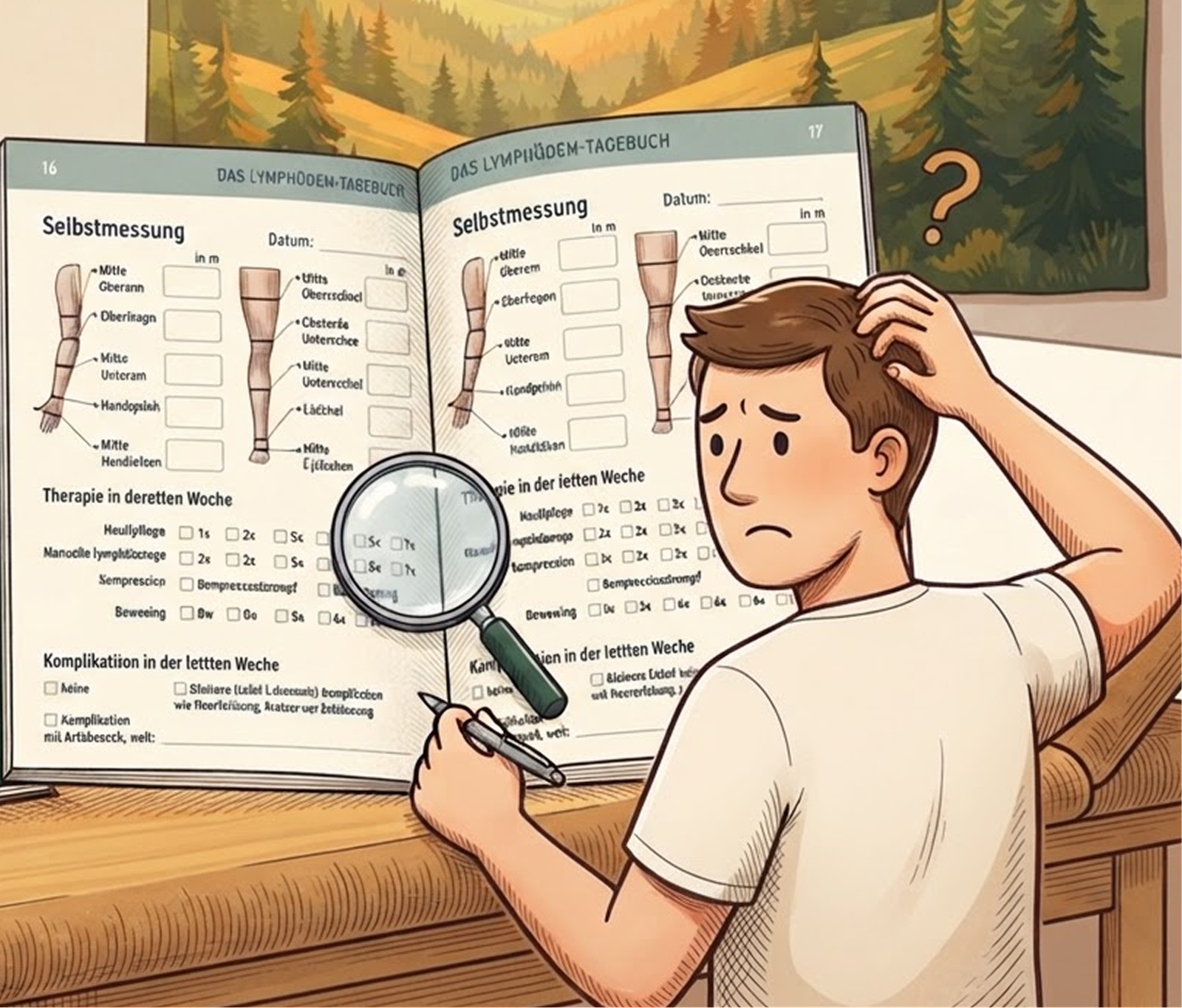
- Record your limb measurements regularly and visualise changes over time
- Set reminders for compression garment renewals and clinical appointments
- Organise structured information to share with your lymphoedema therapist
- Stay consistent between appointments when professional oversight is not available
Ynone is an educational and self-management support tool. It does not diagnose lymphoedema and does not replace your lymphoedema therapist or healthcare team.
→ Join the Beta waitlist at ynone.eu — it's free
Interested in Ynone for your clinic or lymphoedema therapy practice? Visit our partnership page.
Key takeaways
- Complete Decongestive Therapy (CDT) is the internationally recognised gold standard for lymphoedema management.
- CDT combines four pillars: compression therapy, manual lymphatic drainage, therapeutic exercise and skin care.
- Compression therapy is the most important pillar for long-term daily management.
- MLD must always begin centrally — at the neck — before working on the affected limb.
- CDT works in two phases: intensive decongestion followed by lifelong maintenance.
- Phase 2 — the maintenance phase — is where most of the work happens, at home, between appointments.
- Consistent daily self-management is the single most important factor in long-term outcomes.
Sources and clinical references
This article was written using current clinical guidelines and peer-reviewed sources, including:
- International Society of Lymphology (ISL) — Consensus Document on the Diagnosis and Treatment of Peripheral Lymphedema, 2020
- International Lymphoedema Framework (ILF) — Best Practice Documents
- British Lymphology Society (BLS) — Lymphoedema Clinical Definitions and Assessment Guide (5S), September 2025
- Földiklinik / Földi College — CDT clinical principles and training documentation
- Kitaw et al. — Lower limb lymphoedema and mental depression: systematic review and meta-analysis, Global Epidemiology, 2025
This article is reviewed periodically to ensure accuracy. It is intended for educational purposes only. Always consult a qualified healthcare professional for advice about your individual situation.
This article was produced with the support of AI-assisted research and writing tools, and reviewed for clinical accuracy by Dr. Dominique Oberlin, specialist in lymphology at the Földiklinik (Germany) and lead author of the 2026 international lymphoedema clinical guidelines. The final content reflects current evidence-based practice and has been approved for publication by the Ynone clinical advisory team.
Try Ynone for free
Join the App Waiting List
Be among the first to try Ynone and help shape a digital self-management tool built for people living with lymphoedema. No commitment — just early access.
Join the waiting list